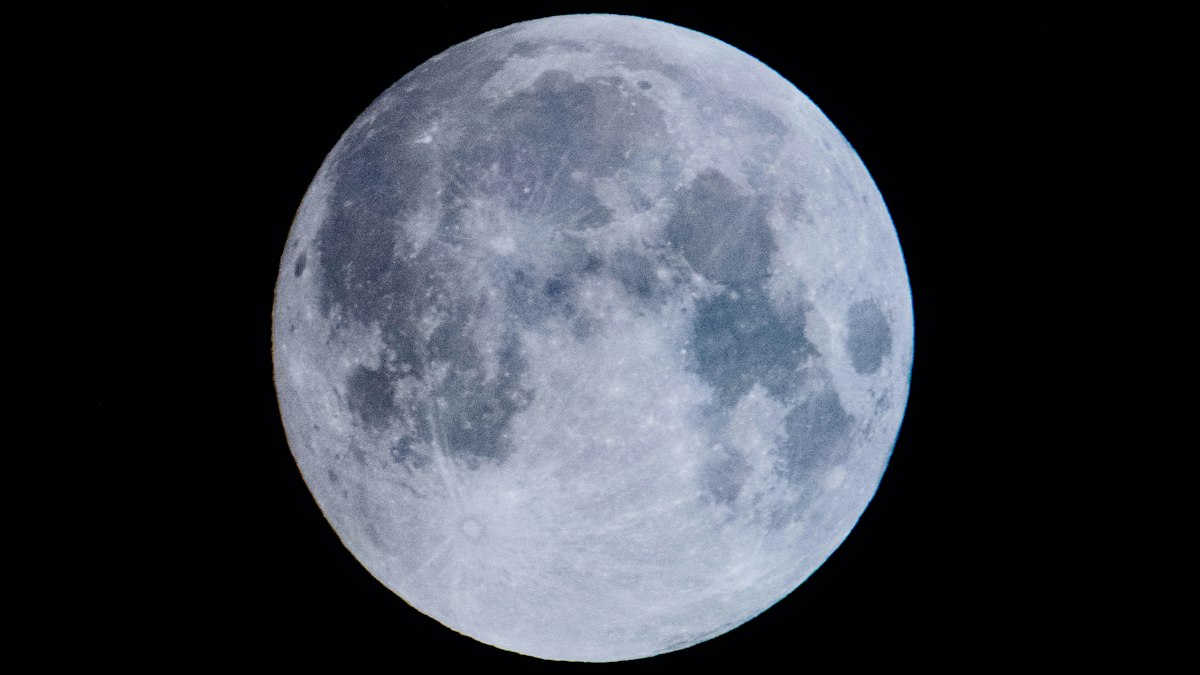
At Launch Complex 39B at NASA’s Kennedy Space Center in Florida, the towering Space Launch System (SLS) rocket and Orion spacecraft stand ready for humanity’s return to deep space. For the first time since the conclusion of the Apollo 17 mission in December 1972, four astronauts—representing NASA and the Canadian Space Agency (CSA)—have completed rigorous mission training to journey beyond low-Earth orbit.
The crewed mission marks the critical operational proving ground for life-support hardware, autonomous deep-space navigation, and orbital flight dynamics required for future permanent lunar bases and crewed expeditions to Mars.
1. The Multi-National Crew and Mission Profile
The four-member crew comprises Mission Commander Reid Wiseman, Pilot Victor Glover, Mission Specialist Christina Koch, and Mission Specialist Jeremy Hansen of Canada. Glover becomes the first person of color to leave low-Earth orbit, Koch the first woman, and Hansen the first non-American to venture into deep space.
The mission architecture utilizes a 10-day “free-return” hybrid trajectory:
- Following liftoff and high Earth orbit systems checks, the SLS upper stage fires the trans-lunar injection (TLI) burn.
- Orion cruises for four days toward the Moon, utilizing lunar gravity to slingshot approximately 10,000 kilometers beyond the lunar far side.
- The free-return trajectory naturally loops the spacecraft back toward Earth without requiring large propellant maneuvers, ensuring crew safety even in the event of primary engine failure.
2. Testing Orion’s Environmental Control and Life-Support Systems
While the uncrewed Artemis I flight verified aerodynamic heat shield performance upon atmospheric reentry, the 2026 mission tests human life-support under extreme operational stress. The European Service Module (ESM)—built by the European Space Agency and Airbus—provides propulsion, electrical power from four solar wings, water, and atmospheric gas recycling.
Inside the pressurized capsule, astronauts tested the amine-based Carbon Dioxide Removal System, advanced urine recycling processors, and personal exercise countermeasures designed to prevent muscle atrophy in microgravity.
This engineering precision parallels the rigorous standards required in autonomous software verification systems.
3. Deep-Space Radiation Defense and Solar Storm Shelters
Beyond the protective blanket of Earth’s magnetosphere, astronauts face intense galactic cosmic rays (GCRs) and unpredictable solar particle events (SPEs). In the event of a severe solar storm detected by space weather satellites, the crew is trained to construct an impromptu storm shelter inside Orion.
By reconfiguring high-density water storage bags, food lockers, and equipment enclosures into a central shielding cocoon, radiation exposure is kept well within occupational career limits.
Key technological and medical milestones of the mission include:
- First human optical laser communications link transmitting 4K live video directly from lunar orbit to ground stations.
- Manual flight handling tests in proximity to the discarded upper rocket stage to verify manual docking handling.
- Biological sampling to measure cellular DNA repair mechanisms during deep-space cosmic ray transit.
These scientific discoveries complement astrophysical observations conducted by the James Webb Space Telescope probing deep space.
4. Groundwork for Permanent Lunar Bases
The crewed flyby mission provides the essential operational foundation for the upcoming Artemis surface landings at the lunar South Pole. Astronauts will photograph permanently shadowed craters suspected of harboring billions of tons of water ice—a resource vital for rocket fuel synthesis and permanent human habitats.
What does humanity’s return to the Moon represent for the future of international scientific collaboration and resource sharing? Share your thoughts below.