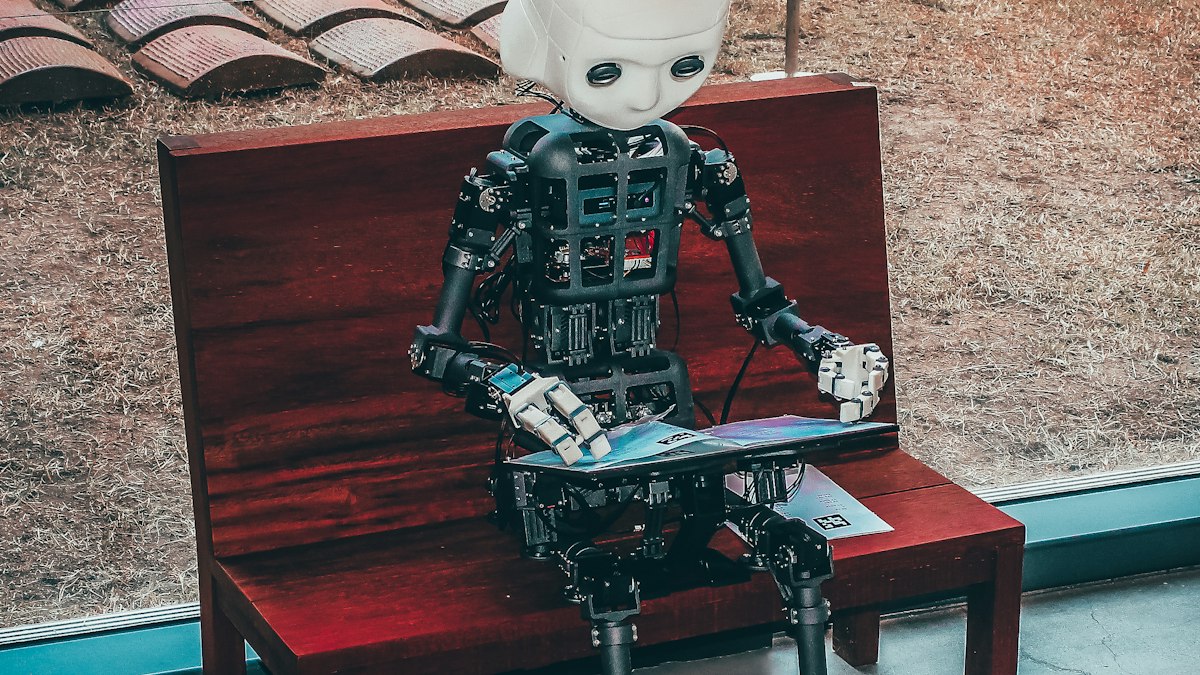
The landscape of advanced automation shifted dramatically today as roboticists unveiled a revolutionary neural tactile sensor array. This breakthrough finally grants humanoid robots a hyper-sensitive sense of touch, forever changing how machines interact with our physical world.
For decades, the robotics industry struggled with a fundamental limitation: machines could see and calculate, but they remained practically numb. Industrial arms could lift heavy payloads, yet they routinely shattered fragile objects due to an inability to gauge delicate pressure variations in real-time.
Overcoming the Robotic Sense of Touch Barrier
The newly developed artificial skin mimics human mechanoreceptors by integrating dense matrices of flexible micro-sensors directly linked to neuromorphic processing cores. Instead of relying on slow, centralized computing clusters, each fingertip processes tactile data locally.
This localized neural architecture slashes latency down to single-digit milliseconds. When a robot equipped with these sensors touches an object, it instantly evaluates texture, temperature, and slip resistance with astonishing precision.
Similar engineering leaps in semiconductor design have paved the way for these complex processors. As seen in recent developments regarding TSMC 2nm mass production for mobile chips, extreme miniaturization allows these dense neural networks to fit directly inside the compact joints of humanoid frames.
Real-World Applications and Industrial Impact
The commercial implications of this tactile breakthrough extend far beyond experimental laboratory settings. Warehousing, advanced manufacturing, and delicate assembly lines are preparing for a massive integration wave as robots gain the ability to sort mixed items effortlessly.
Furthermore, healthcare and domestic assistance sectors stand to benefit immensely from this tactile evolution. Humanoid assistants can now safely handle fragile medical equipment, prepare meals in unpredictable kitchen environments, and provide gentle physical support to elderly patients.
As automation hardware rapidly evolves, policy and global cooperation must keep pace. Ongoing discussions at the UN General Assembly high-level debate have already begun addressing the socio-economic framework needed for widespread humanoid robot deployment.
The Future of Human-Robot Collaboration
Equipped with human-like sensitivity, the latest generation of humanoid machines is no longer confined to cages behind safety glass. They can safely work alongside human colleagues, sharing tools, adapting to cluttered spaces, and communicating physical feedback intuitively.
This milestone brings science fiction closer to reality, transforming robots from rigid tools into truly collaborative partners. The boundary between biological touch and artificial sensation is officially blurring.
How will society adapt when everyday household robots possess a sense of touch nearly indistinguishable from our own?