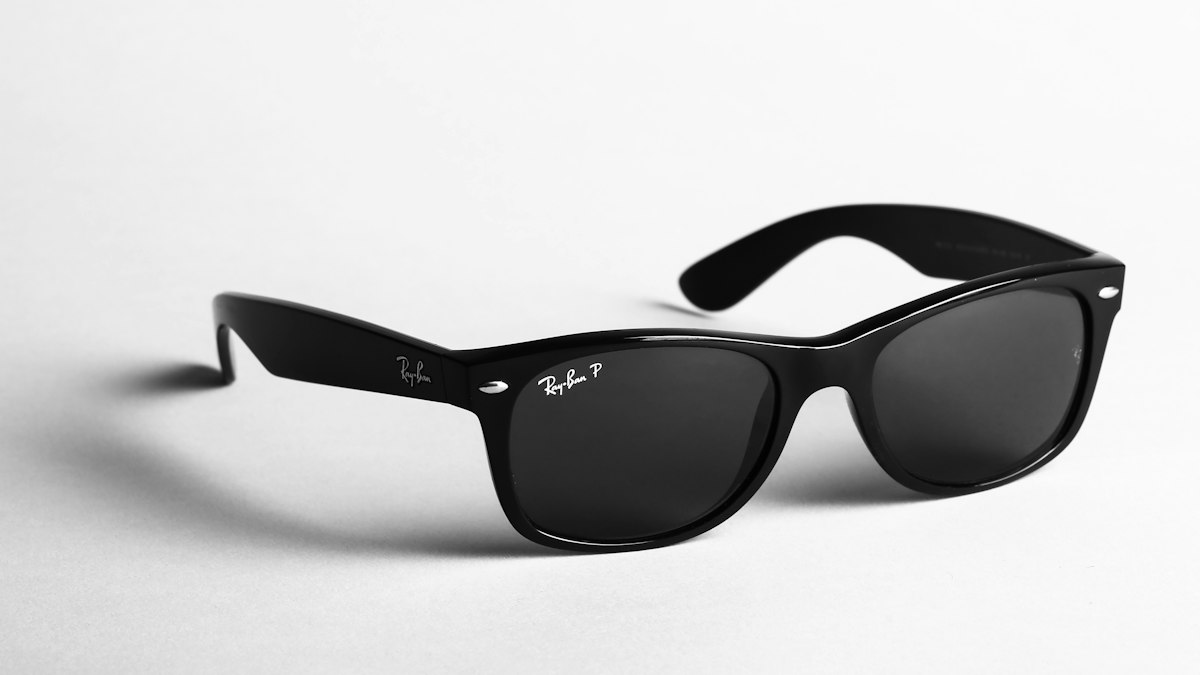
For over a decade, consumer technology companies struggled to liberate digital computing from the handheld glass slab. Early attempts at smart eyewear were plagued by bulky form factors, conspicuous external cameras, poor battery longevity, and low-resolution prism displays that caused severe eye strain.
In 2026, the convergence of diffractive optical waveguides, microscopic micro-LED projectors, and ultra-efficient edge AI processors has transformed smart glasses from niche tech curiosities into stylish, everyday accessories.
1. Achieving the 65-Gram Everyday Form Factor
The critical consumer adoption milestone was achieving aesthetic normality. Utilizing magnesium-alloy frames, custom prescription lenses, and integrated flex-circuit batteries distributed evenly along the temples, modern smart glasses weigh under 65 grams—indistinguishable from designer optical frames.
Micro-LED display engines no larger than a grain of rice project monochromatic or full-color heads-up graphics through diffractive waveguides embedded directly inside the glass. The virtual display appears as a floating, transparent 40-inch screen anchored at an ergonomic focal distance of two meters.
2. Multimodal AI as the Primary User Interface
Smart glasses eliminate the friction of pulling a glass rectangle from a pocket, unlocking it, and scrolling through menus. Instead, contextual vision-language AI models serve as the primary interface:
- Contextual Vision: Outward-facing wide-angle sensors perceive what the user sees, identifying objects, reading nutritional labels, or recognizing landmark history upon a simple glance.
- Directional Audio: Open-ear acoustic transducers beam private stereo sound directly into the ear canal with zero sound leakage to nearby bystanders.
- Real-Time Translation: When traveling abroad, foreign language street signs are digitally translated in-display, and foreign speech is transcribed directly onto the user’s field of view.
These capabilities represent the direct consumer application of on-device small language models.
3. Battery Longevity and Energy Harvesting
Early smart glasses exhausted their internal batteries within two to three hours of continuous use. The 2026 generation achieves 16 hours of mixed-use autonomy through silicon fabricated on TSMC’s 2nm power-efficient process coupled with silicon-anode battery chemistry.
The glasses enter micro-watt sleep states when the user is not actively viewing notifications or accessing audio services, waking instantly upon detecting eye gaze or subtle finger tap gestures on the temple.
4. Privacy Safeguards and Social Etiquette
Public acceptance of smart eyewear has hinged on transparent privacy design. Modern models incorporate tamper-proof, hardware-level LED indicator rings that emit a distinct luminous pattern whenever sensors capture optical data.
Furthermore, biometric data and facial recognition scanning are processed strictly in local device enclave memory, adhering to strict consumer standards established under the EU AI Act.
Will smart glasses gradually relegate smartphones to secondary pocket compute hubs over the remainder of the decade? Let us know what you think in the comments below.